
Normal Blood Sugar Levels Chart
diabetes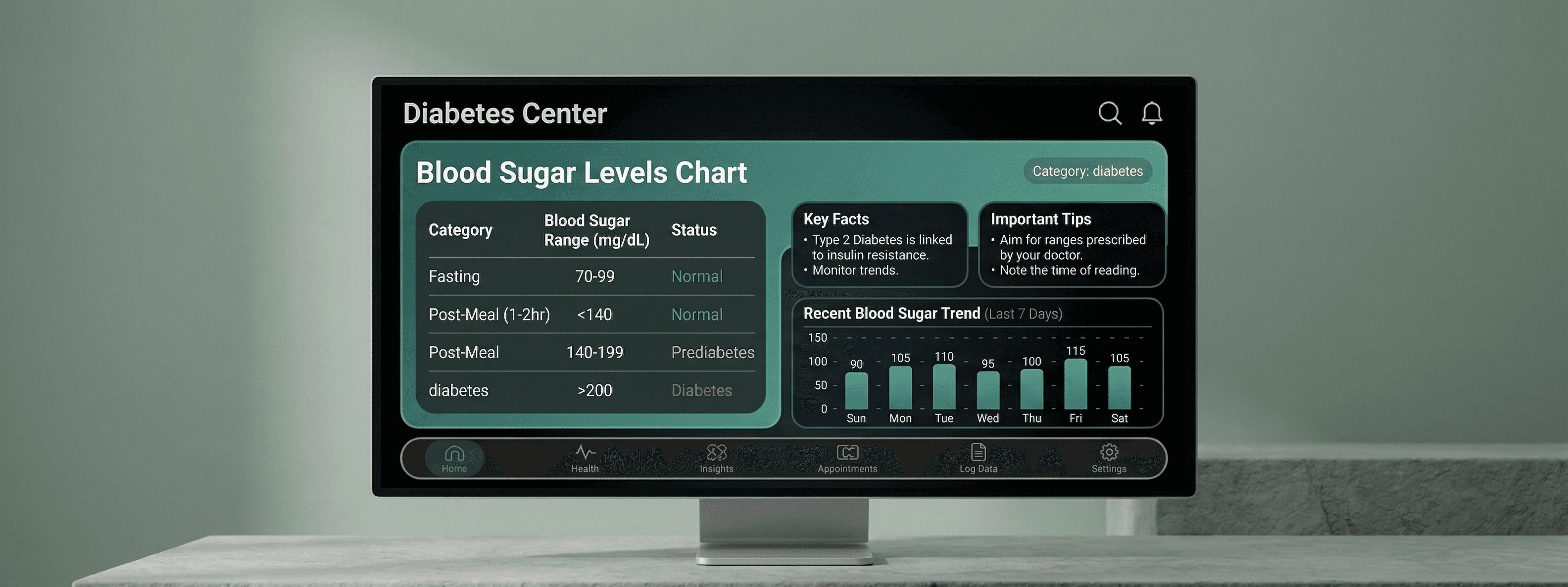
Understand fasting and post-meal sugar levels for better diabetes control.
Blood Sugar Basics
Blood sugar levels vary throughout the day depending on meals and activity.
Maintaining stable sugar levels is essential to prevent diabetes complications.
Knowing your target ranges allows you to interpret your glucose readings with confidence.
Abnormal patterns detected early can prevent full-blown diabetes from developing.
Normal Blood Sugar Reference Ranges
Fasting blood sugar (before meals): Normal <100 mg/dL; Prediabetes 100125 mg/dL; Diabetes ≥126 mg/dL.
Post-meal blood sugar (2 hours after eating): Normal <140 mg/dL; Prediabetes 140199 mg/dL; Diabetes ≥200 mg/dL.
Random blood sugar: A reading of 200 mg/dL or higher along with symptoms suggests diabetes.
For people already diagnosed with diabetes, targets may be adjusted typically fasting <130 and post-meal <180.
Fasting vs Post-Meal: Why Both Matter
Fasting glucose reflects baseline insulin sensitivity and liver glucose output.
Post-meal glucose is often elevated before fasting levels rise making it an earlier warning sign.
High post-meal spikes increase oxidative stress, damage blood vessels, and accelerate aging.
Monitoring both fasting and post-meal levels gives a complete picture of your sugar metabolism.
Factors That Affect Blood Sugar
Food type and portion size have the most direct impact refined carbohydrates cause the sharpest spikes.
Physical activity helps muscles absorb glucose from the bloodstream, lowering sugar levels.
Stress hormones like cortisol raise blood sugar chronic stress can make glucose control harder.
Sleep deprivation reduces insulin sensitivity, causing higher blood sugar the following day.
How to Keep Your Blood Sugar in Range
Eat balanced meals with protein, healthy fat, and fiber to slow sugar absorption.
Avoid skipping meals irregular eating patterns cause blood sugar to swing up and down unpredictably.
Monitor regularly using a glucometer or CGM (Continuous Glucose Monitor) for real-time insights.
Work with your healthcare team to establish personalized targets based on your age, medications, and health goals.
Frequently Asked Questions
A normal fasting blood sugar (after 8+ hours without food) is below 100 mg/dL. 100125 mg/dL indicates prediabetes, and 126 mg/dL or above on two tests confirms diabetes.
People Also Ask
Is 140 blood sugar normal after eating?
140 mg/dL is at the upper boundary of normal post-meal blood sugar. Readings consistently between 140199 mg/dL after meals may indicate prediabetes and should be discussed with a doctor.
What does a blood sugar of 200 mean?
A random blood sugar of 200 mg/dL with symptoms (thirst, urination, fatigue) is diagnostic of diabetes. A single reading without symptoms should be confirmed with a fasting test.
Can exercise lower blood sugar immediately?
Yes. Even a 1520 minute walk after a meal can significantly reduce post-meal blood sugar by helping muscles absorb glucose from the bloodstream.
Why is blood sugar high in the morning?
This is called the 'dawn phenomenon' cortisol and growth hormone naturally rise in the early morning, triggering the liver to release glucose. This is normal but may be more pronounced in diabetics.
Related Articles

HbA1c vs Blood Sugar What's the Difference?
Understand the key differences between HbA1c and blood sugar tests and why both matter for diabetes management.

Early Symptoms of Diabetes
Recognize the early warning signs of diabetes to seek timely diagnosis and treatment.

How to Control Sugar Naturally
Evidence-based natural methods to lower and stabilize blood sugar without medication.