
Low BP Symptoms and Treatment
Blood Pressure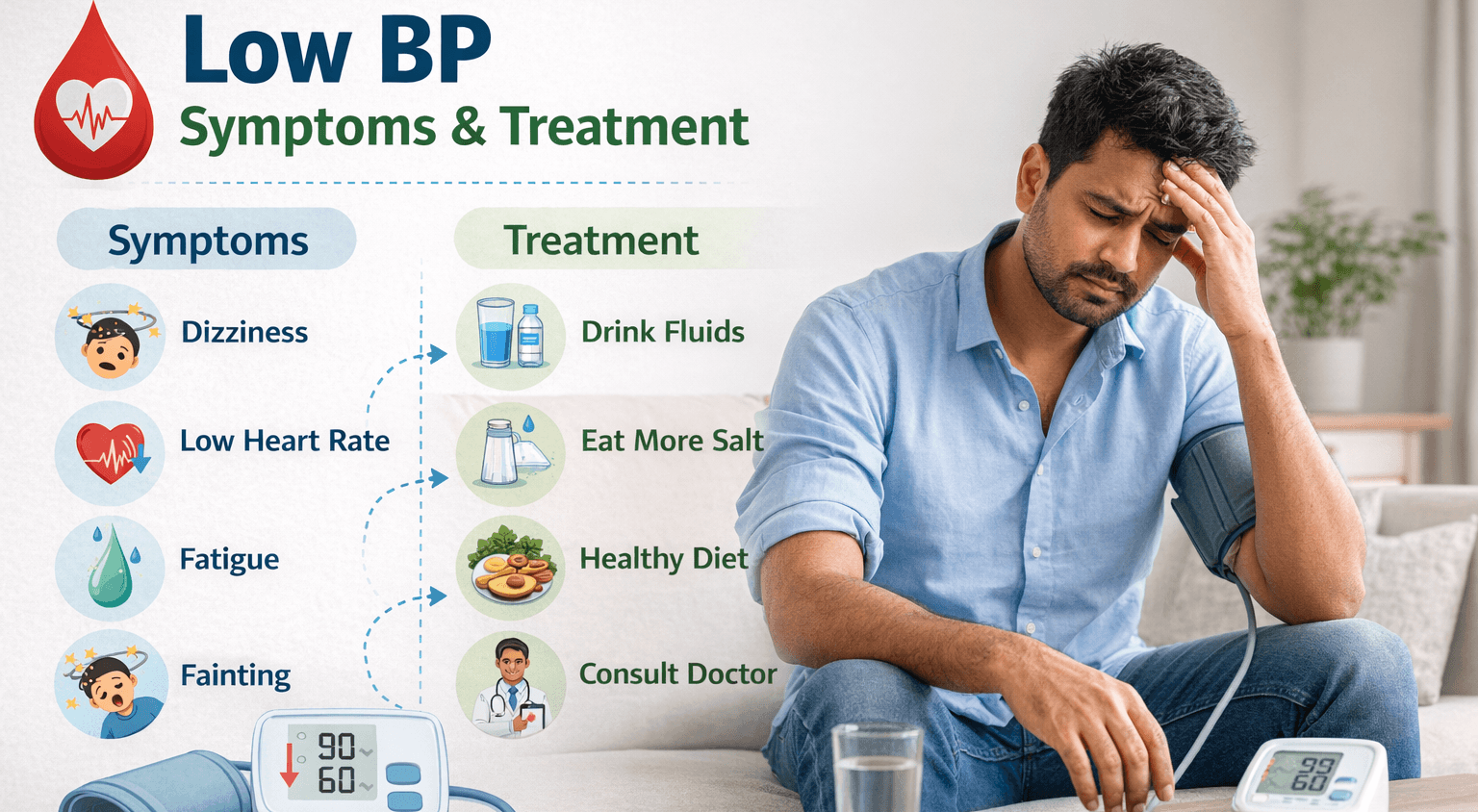
Learn about hypotension its causes, symptoms, and how to treat it effectively.
What is Low Blood Pressure?
Low blood pressure (hypotension) is generally defined as a reading below 90/60 mmHg.
For some people, low BP is normal and causes no symptoms but for others, it can be a sign of an underlying problem.
Hypotension can cause dizziness, fainting, and in severe cases, life-threatening shock.
Understanding the type and cause of your low BP is key to managing it effectively.
Common Symptoms of Low BP
Dizziness or lightheadedness especially when standing up suddenly is the most common symptom.
Fainting (syncope), blurred vision, fatigue, and nausea are also frequently reported.
Cold, clammy, or pale skin may accompany episodes of significant blood pressure drop.
Causes of Low Blood Pressure
Dehydration is one of the most common causes inadequate fluid intake reduces blood volume.
Heart problems, including slow heart rate (bradycardia) or heart failure, can reduce the force of blood pumping.
Severe infections (septicemia), blood loss, and severe allergic reactions can cause dangerous BP drops.
Medications including diuretics, antidepressants, and anti-anxiety drugs can lower BP as a side effect.
Treatment for Low Blood Pressure
Increase fluid intake drinking 23 liters of water per day helps maintain adequate blood volume.
Adding moderate salt to your diet (under medical guidance) can help raise BP in dehydration-related cases.
Wear compression stockings to prevent blood from pooling in the legs, especially for orthostatic hypotension.
Rise slowly from sitting or lying positions to allow your body time to adjust blood pressure.
When to See a Doctor
Seek medical attention if you experience frequent fainting, persistent dizziness, or confusion.
A sudden drop in BP without an obvious cause warrants evaluation for cardiac or endocrine conditions.
Tracking your BP readings over time with HeartView can provide valuable data for your doctor's assessment.
Frequently Asked Questions
Blood pressure below 90/60 mmHg is generally considered low (hypotension). However, for some individuals especially fit, young people this may be normal without causing any symptoms.
People Also Ask
What foods increase blood pressure quickly?
Salty foods (olives, cheese, pickles), caffeinated drinks, and foods rich in B12 and folate can help raise low blood pressure. These should only be used as short-term measures under medical guidance.
Can low blood pressure cause a heart attack?
Severe hypotension can reduce blood flow to the heart muscle, potentially causing ischemia. A sudden BP drop can also trigger fainting and falls, causing injury.
Why does blood pressure drop when standing?
This is called orthostatic (postural) hypotension blood pools in the legs when standing. The body normally compensates quickly, but in some people this compensation is slow, causing dizziness.
Is low BP more dangerous than high BP?
Both are serious. High BP is a more common chronic risk, but severe acute low BP (shock) is immediately life-threatening. Mild chronic low BP, if asymptomatic, is often less concerning than hypertension.
Related Articles

How to Reduce High BP Naturally
Effective natural strategies to lower high blood pressure without relying solely on medication.
Causes of High Blood Pressure
Understand the common and hidden causes of hypertension to better prevent and manage it.

Best Diet for BP Control
Discover the most effective dietary strategies to manage and control blood pressure naturally.