Technology reviewed by Dishant Chanchad, Chief Technology Officer
Published August 12, 2026Updated September 4, 202618 min read
Getting a lab report back full of abbreviations, reference ranges, and unfamiliar units is a common source of quiet anxiety
Getting a blood test report back can feel overwhelming. A single page may contain dozens of abbreviations, numbers, units, reference ranges, and high or low flags. If you do not regularly read medical reports, it can be difficult to know which results matter, which ones are routine, and which questions you should discuss with your healthcare provider.
The good news is that you do not need to become a medical professional to understand the basic structure of a blood test report.
Most routine blood tests are organized into panels. Each panel looks at a different part of your health, such as blood cells, kidney function, blood sugar, cholesterol, thyroid function, or inflammation.
This beginner-friendly guide explains some of the most common blood tests and lab values, what they generally measure, why they may be ordered, and how to approach results that appear outside the reference range.
The goal is not to diagnose yourself from a laboratory report. Instead, it is to help you understand the language of your report so that you can have a more informed conversation with your healthcare provider.
Understanding Your Blood Test Report
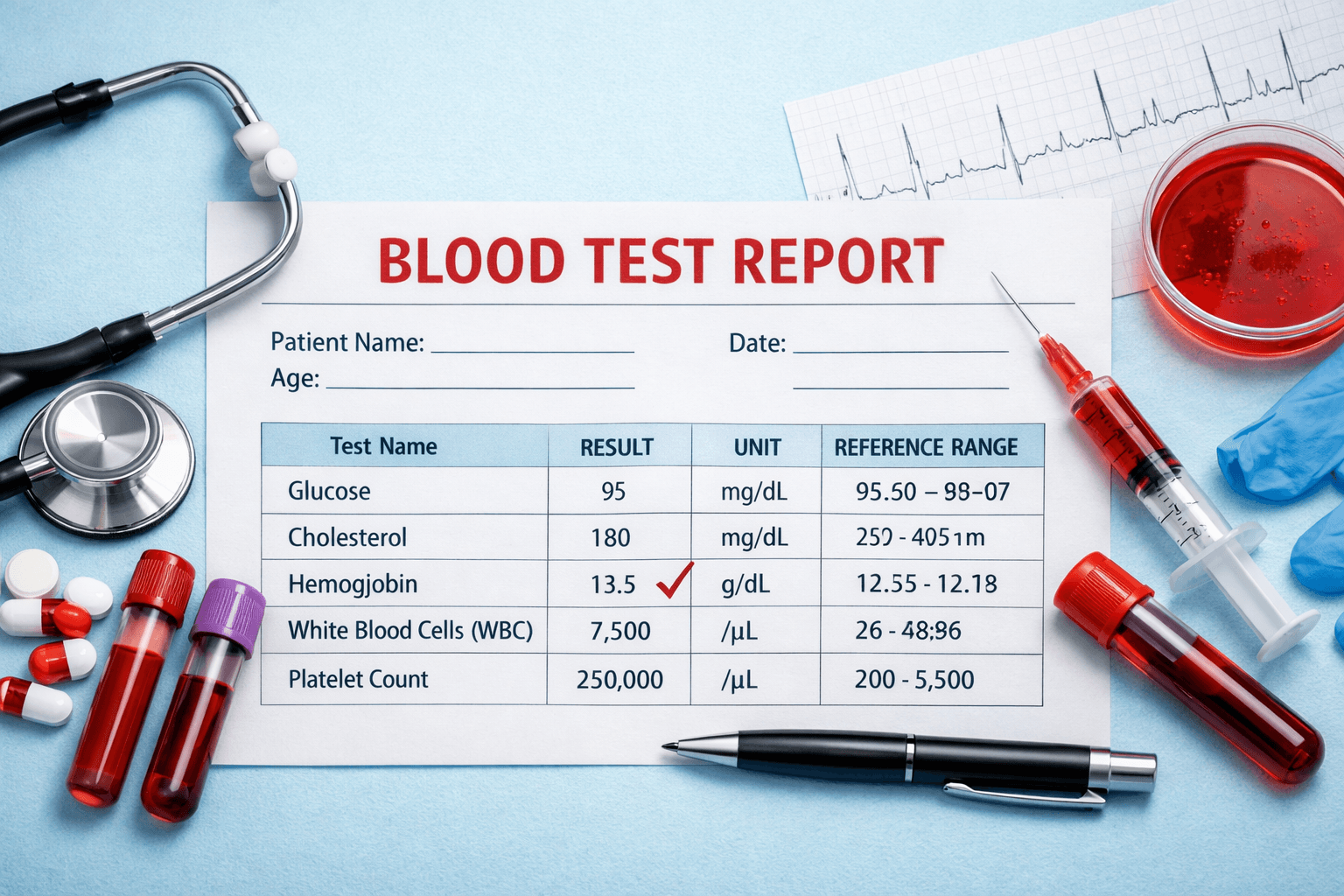
Before looking at individual numbers, it helps to understand how a typical laboratory report is organized.
A report may include:
Test name
Your result
Unit of measurement
Reference range
High or low indicator
Previous result, if available
Comments from the laboratory
For example, a report might show a result followed by a reference range such as:
The reference range gives you a general comparison point. However, it should not be interpreted as a universal definition of health.
Different laboratories may use different testing equipment, methods, populations, and reference ranges. Your age, sex, pregnancy status, medications, medical history, and other factors may also affect how a result should be interpreted.
That is why the number itself is only one part of the picture.
What Does a Reference Range Mean?
A reference range represents values that are considered typical within a particular population used by the laboratory to establish that range.
This leads to several important points.
Reference ranges can vary between laboratories
You may notice that the same test has slightly different reference ranges on reports from different laboratories.
That does not necessarily mean one laboratory is correct and another is wrong. Different testing methods and populations can produce different ranges.
For this reason, it is generally best to compare your result with the reference range printed on your own report.
Outside the range does not automatically mean disease
A result marked H (high) or L (low) does not automatically mean that you have a medical condition.
Healthy people can sometimes have results slightly outside a laboratory's reference range.
Similarly, a result inside the reference range does not guarantee that everything is normal. Your symptoms, medical history, medications, physical examination, and other laboratory results may all matter.
Trends can be more useful than isolated numbers
If you have previous blood tests, looking at how your results have changed over time can provide useful context.
For example, a cholesterol value that has gradually increased over several years may deserve a different discussion than a single mildly abnormal result with no previous history.
Your healthcare provider can help determine whether a trend is clinically meaningful.
Complete Blood Count (CBC)
A Complete Blood Count (CBC) is one of the most commonly ordered blood tests.
It provides information about several types of blood cells, including red blood cells, white blood cells, and platelets.
A CBC may be ordered as part of a routine checkup or when a healthcare provider is investigating symptoms such as fatigue, weakness, fever, unexplained bruising, bleeding, or signs of infection.
Red Blood Cells (RBC)
Red blood cells transport oxygen from the lungs to tissues throughout the body.
A lower-than-expected RBC count can occur with several conditions, including some forms of anemia. A higher count can sometimes be associated with dehydration or other medical conditions.
However, the RBC count should generally be interpreted alongside hemoglobin, hematocrit, and other CBC measurements.
Hemoglobin (Hgb)
Hemoglobin is the oxygen-carrying protein inside red blood cells.
Low hemoglobin is commonly associated with anemia. Depending on the cause and severity, anemia may be associated with symptoms such as:
Fatigue
Weakness
Shortness of breath
Dizziness
Reduced exercise tolerance
A low hemoglobin result does not identify the cause of anemia by itself. Iron deficiency, vitamin deficiencies, blood loss, chronic disease, and other factors can contribute.
Hematocrit (Hct)
Hematocrit represents the proportion of your blood volume made up of red blood cells.
Because hematocrit is closely related to red blood cell volume and hemoglobin, healthcare providers often look at these measurements together.
A low hematocrit may occur with anemia, while a higher result can occur in situations such as dehydration or increased red blood cell production.
White Blood Cells (WBC)
White blood cells are an important part of the immune system.
An elevated WBC count may occur during infections, inflammation, physical stress, or other situations. A low WBC count can have many possible causes, including certain medications, infections, nutritional issues, or conditions affecting the immune or blood-forming systems.
The total WBC count is only part of the story. A CBC may also include different types of white blood cells, known as the differential.
Platelets
Platelets help the body form blood clots and control bleeding.
Very low platelet levels can increase the risk of abnormal bleeding, while significantly elevated levels may also require medical evaluation.
As with other laboratory results, the significance depends on the degree of abnormality, symptoms, medications, medical history, and other results.
Basic and Comprehensive Metabolic Panels
You may see BMP or CMP on your laboratory report.
A Basic Metabolic Panel (BMP) generally evaluates several important measures related to blood sugar, electrolytes, and kidney function.
A Comprehensive Metabolic Panel (CMP) includes many of the same measurements and adds information related to liver and protein status.
The exact list of tests can vary by laboratory.
Glucose: Your Blood Sugar
Glucose is the amount of sugar in your blood at the time of the test.
Your result can be influenced by whether you had eaten recently, medications, illness, physical activity, stress, and other factors.
A fasting glucose measurement is taken after a specified period without food and can be useful when evaluating blood sugar regulation.
A random glucose measurement can also provide useful information, particularly in certain clinical situations.
One glucose result alone does not necessarily establish a diagnosis of diabetes.
For longer-term blood sugar information, your healthcare provider may also consider an HbA1c test.
Creatinine and BUN
Creatinine
Creatinine is a waste product produced through normal muscle metabolism.
The kidneys filter creatinine from the blood, so blood creatinine is commonly used as part of kidney function assessment.
An elevated creatinine level can occur when kidney filtration is reduced, but it can also be influenced by factors such as muscle mass, hydration, certain medications, and other conditions.
That is why creatinine should not always be interpreted by itself.
BUN: Blood Urea Nitrogen
BUN measures nitrogen contained in urea, a waste product produced when the body processes proteins.
The kidneys normally remove urea from the bloodstream.
An elevated BUN can occur with reduced kidney function, but dehydration, dietary factors, gastrointestinal bleeding, and other conditions can also influence the result.
eGFR: Estimated Glomerular Filtration Rate
eGFR is an estimate of how efficiently the kidneys are filtering blood.
It is calculated using blood creatinine along with other factors, depending on the equation used.
eGFR is commonly used to assess kidney function and to help healthcare professionals identify and monitor chronic kidney disease.
However, one eGFR value should not automatically be interpreted as a diagnosis.
Age, previous results, clinical circumstances, and other kidney measurements can be important.
If your eGFR is repeatedly abnormal, your healthcare provider may recommend additional testing or monitoring.
Electrolytes: Sodium, Potassium, and Chloride
Electrolytes help regulate important processes throughout the body.
Sodium
Sodium plays a major role in fluid balance, nerve function, and muscle activity.
Abnormal sodium levels can occur because of changes in hydration, medications, kidney function, hormonal conditions, or other medical problems.
Potassium
Potassium is particularly important for nerve and muscle function and normal heart rhythm.
Both significantly low and significantly high potassium levels can be medically important.
If a potassium result is substantially abnormal, it should be discussed promptly with a healthcare professional rather than interpreted from an online reference range alone.
Chloride
Chloride helps maintain fluid balance and works with other electrolytes to support normal acid-base balance.
It is usually interpreted together with sodium, bicarbonate, potassium, kidney function, and the overall clinical picture.
Calcium
Calcium is important for:
Bone health
Muscle contraction
Nerve signaling
Several normal cellular processes
A blood calcium result can be influenced by factors beyond dietary calcium intake.
Abnormal calcium levels may have many potential causes, which is why healthcare providers may look at other laboratory values and clinical information before deciding what an abnormal result means.
Liver Enzymes: ALT and AST
A CMP may include liver-related measurements such as ALT and AST.
These enzymes are found inside cells, including liver cells.
When cells are irritated or damaged, enzyme levels can sometimes rise in the blood.
Elevated ALT or AST may occur for many reasons, including liver conditions, certain medications, alcohol exposure, metabolic conditions, muscle injury, and other factors.
Importantly, a mild elevation does not automatically mean serious liver disease.
Healthcare providers may consider the degree of elevation, whether the result persists, other liver tests, medications, symptoms, and medical history.
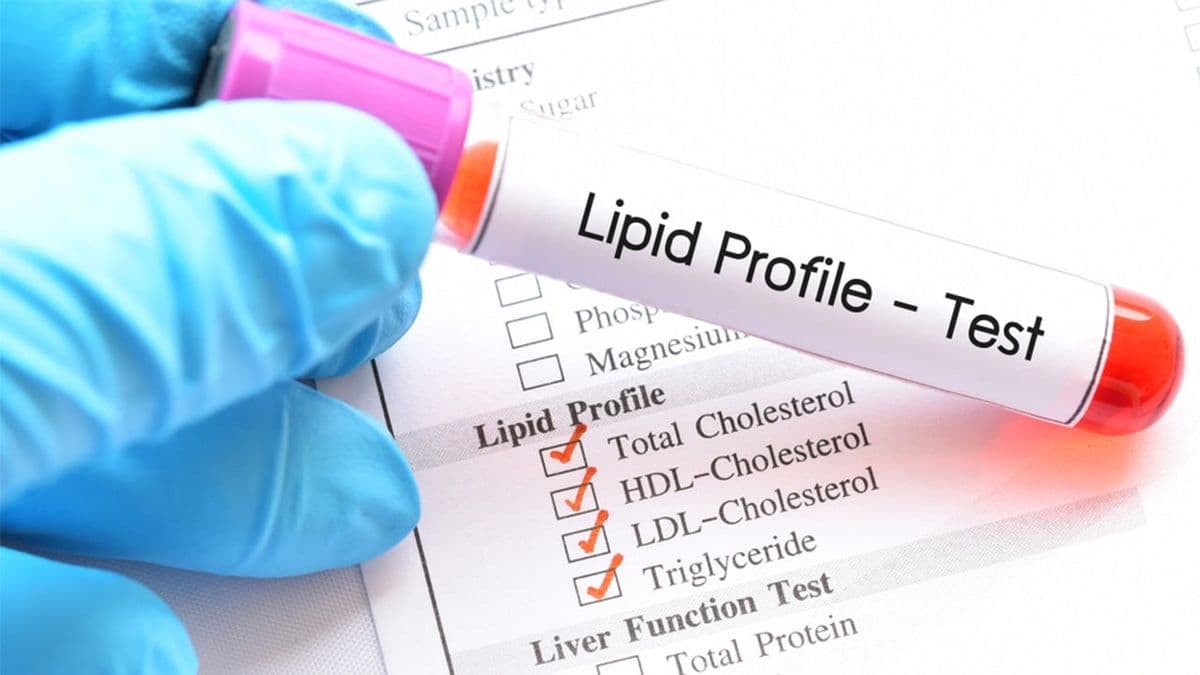
Understanding Your Lipid Panel
A lipid panel evaluates several fats and cholesterol-related measurements in the blood.
Common measurements include:
Total cholesterol
LDL cholesterol
HDL cholesterol
Triglycerides
These values are used together with other factors to understand cardiovascular risk.
LDL Cholesterol
LDL is commonly called “bad” cholesterol because higher levels can contribute to cholesterol buildup in artery walls.
The appropriate LDL goal can vary depending on an individual's overall cardiovascular risk and medical history.
HDL Cholesterol
HDL is commonly called “good” cholesterol because HDL particles participate in transporting cholesterol away from tissues.
However, HDL should not be interpreted as a simple “higher is always better” number. Cardiovascular risk depends on the overall pattern of risk factors and lipid measurements.
Triglycerides
Triglycerides are another type of fat found in the blood.
Elevated triglycerides can be associated with metabolic health, diet, alcohol intake, certain medications, obesity, diabetes, and other conditions.
Your healthcare provider may consider triglycerides together with LDL, HDL, glucose, blood pressure, and other cardiovascular risk factors.
For a deeper explanation of cholesterol values, see our guide to LDL vs HDL Cholesterol: What the Numbers on Your Lipid Panel Mean.
Understanding a Thyroid Panel
Thyroid testing is often used when symptoms or other findings suggest that thyroid function may need evaluation.
Common tests include TSH, Free T4, and sometimes Free T3.
TSH: Thyroid-Stimulating Hormone
TSH is produced by the pituitary gland and helps regulate thyroid hormone production.
In many situations, a higher TSH can be associated with an underactive thyroid, while a lower TSH can be associated with an overactive thyroid.
However, TSH should be interpreted in context.
Medications, pregnancy, illness, thyroid disorders, and other factors can affect thyroid test results.
Free T4
Free T4 represents the unbound form of thyroxine circulating in the blood.
It is often used alongside TSH to help determine whether thyroid hormone levels are appropriate.
Free T3
Free T3 measures the unbound form of triiodothyronine.
It may be useful in particular thyroid-related situations, but it is not necessarily required for every person undergoing thyroid testing.
HbA1c: Your Longer-Term Blood Sugar Picture
HbA1c provides an estimate of average blood glucose levels over roughly the previous two to three months.
Unlike a fasting glucose test, HbA1c generally does not require fasting.
It is commonly used for screening and monitoring diabetes and prediabetes.
One important advantage is that it is less affected by what you ate immediately before the test.
However, HbA1c can be affected by certain conditions involving red blood cells or hemoglobin. Your healthcare provider can determine whether HbA1c is an appropriate measure for your situation.
When blood sugar results are abnormal, your provider may consider HbA1c alongside fasting glucose and other information rather than relying on one number alone.
Inflammatory Markers: CRP and hs-CRP
CRP: C-Reactive Protein
CRP is a protein produced by the liver that can increase when inflammation is present in the body.
CRP may rise with infections, injuries, inflammatory conditions, and other situations.
Because CRP is not specific to one disease, an elevated result generally cannot tell you exactly where inflammation is coming from.
hs-CRP: High-Sensitivity C-Reactive Protein
High-sensitivity CRP can detect smaller changes in CRP levels and may be used in certain situations to help assess cardiovascular risk.
It is important not to interpret hs-CRP as a stand-alone test for heart disease.
Temporary illness, injury, and other inflammatory conditions can influence CRP levels.
Your healthcare provider can determine whether the result is meaningful in the context of your overall cardiovascular risk.
How to Actually Read Your Blood Test Report
Once you understand the major panels, the next step is knowing how to approach the report itself.
1. Look for Flags First
Many laboratory reports highlight results outside their reference range.
You may see:
H = High
L = Low
Abnormal
A highlighted value
An arrow pointing up or down
These flags can help you identify which results may need discussion.
But remember: a flag is a signal to look closer, not a diagnosis.
2. Look at How Far the Result Is From the Range
Do not focus only on whether something is technically high or low.
A result that is only slightly outside a reference range may have a very different clinical meaning from one that is substantially abnormal.
The actual significance depends on the specific test.
For example, a mildly abnormal result may simply require repeat testing or monitoring, while a markedly abnormal result may require more immediate evaluation.
Your healthcare provider is best positioned to determine the appropriate response.
3. Compare With Your Previous Results
If you have older laboratory reports, look at the trend.
Ask:
Has the result changed significantly?
Has it remained stable?
Has it gradually increased or decreased?
Was the previous test performed under similar circumstances?
Are other related values changing at the same time?
For many health measurements, the trend can provide valuable context.
4. Consider the Entire Panel
Avoid interpreting one laboratory value in isolation.
For example, kidney function may involve creatinine, eGFR, BUN, electrolytes, urine testing, blood pressure, medications, and medical history.
Similarly, anemia evaluation may involve hemoglobin, hematocrit, RBC indices, iron studies, vitamin levels, symptoms, and other information.
Laboratory medicine is often about patterns rather than isolated numbers.
5. Consider Why the Test Was Ordered
The reason your healthcare provider ordered the test matters.
A blood test ordered during a routine health check may be interpreted differently from the same test ordered because you have specific symptoms.
Your age, medical history, medications, recent illness, lifestyle, and other clinical factors can also affect interpretation.
Common Mistakes to Avoid When Reading Lab Results
Mistake 1: Assuming Every Abnormal Result Means Disease
A slightly high or low result is not automatically a diagnosis.
Laboratory values naturally fluctuate, and reference ranges are statistical tools rather than absolute boundaries between health and disease.
Mistake 2: Comparing Your Result With Random Online Ranges
Always start with the reference range provided by the laboratory that performed the test.
Different laboratories can use different methods and ranges.
Mistake 3: Ignoring Symptoms
A laboratory report does not exist separately from the person.
If you have symptoms, tell your healthcare provider even if your laboratory values appear normal.
Mistake 4: Focusing on One Number
A single value rarely tells the entire story.
Related results and trends may provide much more useful information.
Mistake 5: Assuming “Normal” Means Everything Is Perfect
A laboratory result within the reference range is reassuring in many situations, but it does not rule out every possible health problem.
Laboratory tests are only one component of medical evaluation.
When Should You Talk to Your Doctor About a Lab Result?
You should discuss abnormal or unexpected results with your healthcare provider, particularly when:
A result is significantly outside the reference range
The same abnormality appears repeatedly
Your result has changed substantially from previous tests
You have symptoms that may relate to the result
You are taking medications that may affect the test
Your healthcare provider specifically asked you to follow up
Multiple related results are abnormal
Some laboratory abnormalities may require urgent attention, especially when they are severe or occur alongside concerning symptoms.
If you receive a report marked as critical or are contacted directly by the laboratory or healthcare facility about an urgent result, follow their instructions promptly.
Questions to Ask Your Healthcare Provider
Instead of searching every number independently, consider taking a few focused questions to your appointment:
Which results are most important for me?
Is anything significantly outside the expected range?
How do these results compare with my previous tests?
Could any medication or recent illness have affected the results?
Do I need to repeat any of these tests?
Are there lifestyle changes I should consider?
Do I need any additional testing?
When should I have these values checked again?
These questions can make your appointment more productive and help you understand what your results mean in your specific situation.
Making Your Blood Test Report Easier to Understand
A useful approach is to think of your report as a collection of clues rather than a list of diagnoses.
Start by identifying the major panels:
CBC: Looks primarily at blood cells and related measurements.
BMP/CMP: Provides information about glucose, electrolytes, kidney function, and, with a CMP, several liver-related measurements.
Lipid Panel: Measures cholesterol and triglycerides and contributes to cardiovascular risk assessment.
Thyroid Panel: Evaluates thyroid-related hormones, commonly beginning with TSH.
HbA1c: Provides a longer-term picture of average blood glucose.
CRP/hs-CRP: Provides information related to inflammation, with hs-CRP sometimes used as part of cardiovascular risk assessment.
Once you understand what each panel is designed to measure, the report becomes much less intimidating.
The Bigger Picture: Your Lab Report Is Only One Part of Your Health
It can be tempting to treat a laboratory report like a scorecard.
However, health is more complicated than a collection of numbers.
Your healthcare provider may consider:
Symptoms
Age
Family history
Blood pressure
Weight and metabolic health
Medications
Diet and physical activity
Smoking and alcohol exposure
Previous laboratory results
Physical examination
Imaging or other diagnostic tests
A result that appears concerning in isolation may turn out to be less significant when considered in context.
Likewise, a result that appears normal may still need attention if you have persistent symptoms or other risk factors.
This is why online searches and automated interpretations should not replace a conversation with a qualified healthcare professional.
Practical Checklist for Your Next Blood Test Report
When you receive your next report, use this simple checklist:
1. Identify the panel. Is it a CBC, metabolic panel, lipid panel, thyroid test, HbA1c, or another test?
2. Check the reference range. Use the range printed by your laboratory.
3. Look for H or L flags. These identify values outside the stated range.
4. Check the magnitude. See how far the result is from the reference range.
5. Compare with previous reports. Look for meaningful changes or trends.
6. Review related results together. Avoid focusing on one isolated number.
7. Consider your symptoms and circumstances. Recent illness, medications, fasting status, hydration, and other factors may matter.
8. Write down your questions. Bring them to your healthcare provider rather than trying to reach a diagnosis yourself.
The Bottom Line
A blood test report may initially look like a confusing collection of abbreviations and numbers, but understanding its basic structure can make it much easier to follow.
The CBC provides information about red blood cells, white blood cells, and platelets. A BMP or CMP provides information about glucose, electrolytes, kidney function, and, in the case of a CMP, additional liver-related measurements. A lipid panel looks at cholesterol and triglycerides. Thyroid tests evaluate hormones involved in thyroid function, while HbA1c provides a longer-term picture of blood sugar. Tests such as CRP and hs-CRP provide information related to inflammation.
The most important lesson is that a laboratory value should rarely be interpreted in isolation.
Look at the reference range, consider how far the result falls outside it, compare it with previous results when available, and consider the reason the test was ordered. Most importantly, discuss unexpected or abnormal findings with your healthcare provider.
Understanding your blood test report does not mean diagnosing yourself. It means becoming better informed, asking better questions, and participating more confidently in conversations about your health.
Medical Disclaimer: This article is provided for general informational and educational purposes only. It is not intended to provide medical advice, diagnosis, or treatment. Laboratory reference ranges and test interpretation can vary between individuals and laboratories. Do not make medical decisions, start or stop medications, or delay professional care based solely on information in this article. Always discuss your blood test results and any health concerns with a qualified healthcare professional.
This article is for general information only and is not a substitute for professional medical advice, diagnosis or treatment. Read our Medical Disclaimer.
Frequently Asked Questions
No. Blood tests provide important information, but they generally cannot establish a diagnosis by themselves. Healthcare providers interpret laboratory results together with symptoms, medical history, physical examination, medications, and other tests.
A result outside the reference range does not necessarily mean that you are sick. Healthy people can occasionally have values outside a laboratory's reference range. The degree of abnormality and the overall clinical context matter.
Laboratories may use different testing methods, instruments, populations, and statistical approaches when establishing reference ranges. Always begin with the reference range shown on your own report.
Neither should automatically be considered more important. Symptoms and laboratory results provide different types of information. A healthcare provider combines them to form a more complete clinical picture.
No. Some tests may require fasting while others do not. Your laboratory or healthcare provider should tell you whether fasting is required and how long you should avoid food beforehand. Do not assume that every blood test requires fasting.
Previous reports can help your healthcare provider identify trends. A single result may be less informative than a pattern showing how a measurement has changed over time. Keeping copies of important laboratory reports can therefore be useful for future appointments.
“H” commonly means that the result is above the laboratory's stated reference range. It does not automatically mean that you have a disease.
“L” commonly means that the result is below the laboratory's stated reference range. As with a high result, the clinical importance depends on the specific test and your overall situation.
Common Questions About Lab-Reports
What should I look at first on my blood test report?
Start by checking values marked as high (H), low (L), or outside the reference range. Then consider how far the result is from the range and compare it with your previous results if available.
Does an abnormal blood test result always mean something is wrong?
No. A result outside the reference range does not automatically indicate a health problem. Reference ranges vary between laboratories, and individual results can naturally fall slightly outside them. Your symptoms, medical history, and other test results are also important.
Why is my blood test report showing so many different reference ranges?
Different tests measure different things and therefore have different reference ranges. Ranges can also vary between laboratories because of differences in testing equipment, methods, and populations used to establish them.
Should I be concerned about one slightly abnormal blood test result?
Not necessarily. A mildly abnormal result can occur due to normal biological variation, temporary factors, or differences between testing methods. It is usually more useful to look at the overall pattern and changes over time with your healthcare provider.